Monday, November 5, 2018

Get out there and face down your giant because the heroically courageous come out on top.

Where does courage come from? And how do you get it when you need it, when some fear towers over you and threatens you, and you feel like cowering and fleeing into some cave of protection?
For an answer, let’s look at one of the most famous stories of all time in 1 Samuel 17 — and one of the most misunderstood stories in the Bible.

David and Goliath. 

Three thousand years ago, in the Valley of Elah, a massive man named Goliath of Gath stepped out of the Philistine ranks to defy and taunt the army of Israel and its God.

For forty days, he harangued the Israelite warriors, heaping shame on them, since none dared to accept his fight-to-the-death, winner-takes-all challenge. 

Every morning when he stepped forward, the men of God shrank back.

Then a teenage Hebrew shepherd boy named David showed up in the camp with some bread and cheese for his soldier big brothers and heard the giant pour out his scorn on the impotent host of his Lord. 
David was indignant. So he took his shepherd’s sling, grabbed a few stones, knocked Goliath on the block, and chopped off his head.

What David and Goliath is not about.

Many think David’s defeat of Goliath is a story of personal courage in the face of overwhelming odds.


They see David as the archetypal underdog, an Old Testament Rocky Balboa, standing up to an arrogant, powerful blowhard. They see him as a self-confident, independent young man who was brave enough to fight for what was right and rely on his own strength and skills, rather than conform to conventional tactics.

The popular moral of the story is this: Get out there and face down your giant because the heroically courageous come out on top.
But that is not at all what this story is about. It’s true that David was courageous, and courage is an essential, glorious virtue. But when he faced Goliath, David’s courage was a derivative virtue. It was being empowered by something else.

The Source of Davids Courage. 

Before looking at where David’s courage came from, we need to ask why Saul and his soldiers lacked it, at least at this moment. 

On the surface, the answer seems manifestly obvious. The Philistine champion was about nine-feet tall and incredibly strong (1 Samuel 17:4–7). 

He was a highly trained, experienced massacre machine who had sent many opponents to meet their Maker (1 Samuel 17:33). Physically, every man in the Hebrew camp was outclassed. Fighting Goliath looked like suicide, plain and simple.

But it is not so plain and simple. First of all, because fighting Goliath didn’t look like suicide to David, who was as physically outclassed as anyone else. But also, because these men believed in God and knew Israel’s history. They knew the stories, how God had overcome one giant adversary after another. Many of them had personally seen God do amazing things, such as Jonathan’s defeat of a Philistine garrison in 1 Samuel 14.

No, the men lacked courage to face Goliath because at this moment the men lacked faith. At this moment, for whatever reason, despite all the stories and past experiences, Goliath looked bigger than God. Each man believed that if he went out against this humungous human, he would be on his own and end up as bird food (1 Samuel 17:44).


Davids deep confidence in God.

So what made David different? 

It was not because he had the self-generated, raw, cool courage of the American action-movie hero. 

What fueled David’s courage was his confidence in God’s promises and God’s power to fulfill them.


In the preceding chapter, Samuel the prophet had informed David that God had chosen him to be the next king of Israel and anointed him with his brothers around him (1 Samuel 16:13). David knew this information when he arrived in the camp and heard Goliath’s sneering rants. And he drew additional confidence by remembering how God had helped him in the past (1 Samuel 17:34–36).

This reality was David’s courage wellspring. He was not self-confident; he was God-confident.

David believed that God would never break his promise, and if Goliath made himself an obstacle to God’s promise, God could flick him out of the way with a pebble. David saw God as bigger and stronger than the fearful Philistine. So he went out to fight knowing that God would give him victory over Goliath — and when he did, the victory would demonstrate God’s power and faithfulness, not David’s courage (1 Samuel 17:46–47).


Whats the source of your courage?

Courage is not an autonomous, self-generated virtue.

Courage is always produced by faith, whether our faith is in God or something else. 

Courage is a derivative virtue.


For the Christian, a lack of courage, what the writer of Hebrews calls “shrinking back” (Hebrews 10:37–38), is always evidence of a lack faith in a promise of God. Some “Goliath” is looming larger than God in our sight and taunting us into humiliation. All we see is how weak and pathetic we are, and how inadequate we are to face him. Fighting him seems impossible, and the thought immobilizes us.

All of us experience this fear. So did David. David is such a helpful example for us, not only because he fueled his confidence and courage to face Goliath from God’s promises, but also because he so frequently felt fearful and needed to encourage his soul again by remembering God’s promises. A quick read through the first 25 psalms shows how often David battled fear and unbelief.


Get Angry at Fear.
But faith made David more than courageous. When he heard the Philistine defy the living God and his army, it made David angry. 


Goliath’s taunts and accusations scorned God’s glory. And when no one stepped up to defend God’s name, it made God look weak. 
David would not tolerate that.

And such should also be our response to every fear and “lofty opinion raised against the knowledge of God” (2 Corinthians 10:5). Our fears are not primarily about us, even though they feel that way. Our fears are primarily about God. They impugn God’s character and call him weak, or non-existent. They defy God and his church.

That is an outrage, and our call is to stop cowering and stand up to our fears, not allowing them to intimidate us into unbelief.


Gospel Giant Slaying. 
In the new covenant, we are not to battle flesh and blood (Ephesians 6:12), but to love our human enemies (Luke 6:27). However, we are to “take every thought captive to obey Christ” (2 Corinthians 10:5). 


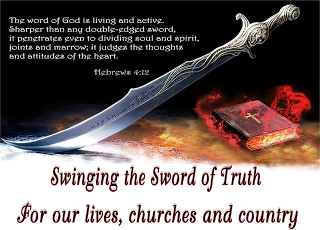
Our “Goliaths” are our indwelling sin and the “spiritual forces of wickedness in the heavenly places” (Ephesians 6:12). And we are to wield warfare weapons against them (2 Corinthians 10:4), including the shield of faith and the sword of God’s word (Ephesians 6:16–17). We are to aim to kill.

These giants, who are bigger than we are and very intimidating to our flesh, will be slain just like David’s was — by faith. And our courage to face them will not come from our self-confidence. It will only come from confidence in God’s powerful promises.




Tuesday, October 30, 2018

Six Signs of a Spiritually Divided Heart.

Psalm 119 provides all the answers we could ever hope for in regards to approaching the Bible with an undivided heart.

So how do I know if I’m seeking God with all my heart? 
How do I know if I love God with all my heart? 
How do I know if I believe God with all my heart? 

How do I determine if my heart is divided or united to fear God’s name in truth (Psalm 86:11)?


A cursory glance through Psalm 119 reveals the heart of an author wholly enveloped in the words of God that not only read the word of God on a regular basis, but lived its truth in his every-day life.


1. A spiritually divided heart is emotionally unstable.

“Blessed are they who keep his statutes and seek him with all their heart.” (Psalm 119:2) The Hebrew word for “blessed” in this passage is ‘esher (eh’-sher) which translates “happy”. 

Blessed does not mean wealthy, successful, powerful, popular, or prominent though it may certainly be a blessing to have those statuses. A divided heart is revealed in a saddened or discouraged countenance. Is my life characterized by happiness and peace or worry and confusion? Am I tossed into the depths of despair through every undesirable circumstance or have I entrusted my innermost source of happiness to God’s word? The only way I can have lasting happiness is to walk by and believe God’s word of truth.


2. A spiritually divided heart is wandering.
“I seek you with all my heart; do not let me stray from your commands.” (Psalm 119:10) God’s word is not a list of rules keeping me boxed in under the heavy thumb of dictatorship. God’s word was inspired and written for my greatest good. The Bible clearly outlines and defines what path to travel, what attitude is appropriate, and what ministries to pursue. When I start to rely on my own reasoning, logic, and understanding, I stray from God’s perfect knowledge of His creation—me.  My heart is divided when I fight against the truth of God’s revealed word and willfully or ignorantly choose my own path.

3. A spiritually divided heart is selfish.
“Turn my heart towards your statutes and not toward selfish gain. Turn my eyes away from worthless things; preserve my life according to your word.” 

(Psalm 119:36-37) Left to my own devices I am bent towards selfishness. 
When I argue with my spouse over where to eat dinner I put my needs in front of his. When I am offended by the opinions of others, threatened by the status of a peer, or hesitant to give of my abundance to someone in need, I am selfish. I have strayed from God’s word and will and allowed my flesh to take over. My heart has been divided. I have failed to esteem others as better than myself (Philippians 2:3).
4.  A spiritually divided heart is inconsistent.
“This has been my practice: I obey your precepts.” (Psalm 119:56) Can I truthfully proclaim that I obey God’s word without falter every second of every day? Not a chance. However, the undivided heart, or the heart walking through life believing God’s word, will be swayed towards obedience. Willful rebellion will be the exception, not the rule. When my daily practice is devoted to knowing and following God’s word, my heart is united in truth.

5. A spiritually divided heart is malnourished.
“How sweet are your words to my taste; sweeter than honey to my mouth!” (Psalm 119:103) When I am hurt, angry, confused, or otherwise afflicted, where do I turn for guidance and comfort? Do I seek the opinions of friends, family, pastors, and teachers first or do I seek the counsel of God? The more of his words I consume, the more nourished I will be. 

When I neglect his guidance and first seek help from human sources I am left hungry and malnourished. If I don’t know the word of God, how will I know if the advice I’m given is biblical? Like the prophet Isaiah so eloquently stated: “Why spend money on what is not bread, and your labor on what does not satisfy? Listen, listen to me, and eat what is good and your soul will delight in the richest of fare.” (Isaiah 55:2)
6. A spiritually divided heart is fearful.
“I will speak of your statutes before kings and will not be put to shame, for I delight in your commands because I love them.” (Psalm 119:46-47) If my Monday through Saturday life does not line up with my Sunday life, I should be afraid to speak of my faith. Without a living, active gospel displayed through my life, I will be put to shame when I witness to others. How can I preach to someone when my life is the opposite of my message? When I hear of terminally-ill loved ones, if unsure about their eternal destiny, I am motivated to witness to them before it’s too late. But was I motivated to witness before I knew they were sick? Shouldn’t every day be an opportunity to love God, live God, and display God in everything I do?  If I am not displaying the love of God by witnessing to my lost friends and neighbors, I am living in fear. I want my life to always back up my message and never distract from the wonderful, freeing truth of the Gospel of Christ.


Psalm 119 reminds to check my heart-status. 
Am I whole-heartedly seeking God and his word or am I offering up only the pieces I prefer? 

Can I stand beside the Psalmist and before God, unashamed and fully exposed and still declare, “My soul is consumed with longing for your laws at all times. Your statutes are my delight and I have chosen the way of truth.” (Psalm 119:20, 24, 30) That is my desire; to live with an undivided heart wholly united with God’s word.

Courage is indispensable for both spreading and preserving the truth of Christ. 
Paul warned that, even in the church, faithfulness to the truth would be embattled: 

"I know that after my departure savage wolves will come in among you, not sparing the flock; and from among your own selves men will arise, speaking perverse things, to draw away the disciples after them" (Acts 20:29-30; see also 2 Timothy 4:3-4).
Therefore, true evangelism and true teaching will take courage. Running from resistance in evangelism or teaching dishonors Christ. There is a kind of cowardice that tells only the truths that are safe to tell.

Martin Luther put it like this: If I profess with the loudest voice and clearest exposition every portion of the truth of God except precisely that little point which the world and the devil are at that moment attacking, 
I am not confessing Christ, however boldly I may be professing Christ. 
Where the battle rages, there the loyalty of the soldier is proved, and to be steady on all the battlefield besides is mere flight and disgrace if he flinches at that point. (Quoted in Parker T. Williamson, Standing Firm: Reclaiming Christian Faith in Times of Controversy [Springfield, PA: PLC Publications, 1996], p. 5)

Where then shall we get this courage? Consider these pointers.
FROM BEING FORGIVEN AND BEING RIGHTEOUS - "The wicked flee when no one pursues, but the righteous are bold as a lion" (Proverbs 28:1). "Seeing their faith, Jesus said to the paralytic, 'Take courage, son; your sins are forgiven'" (Mathew 9:2).
FROM TRUSTING GOD AND HOPING IN HIM - "Be strong and let your heart take courage, all you who hope in the LORD" (Psalm 31:24; see also 2 Corinthians 3:12).
FROM BEING FILLED WITH SPIRIT - "They were all filled with the Holy Spirit and began to speak the word of God with boldness" (Acts 4:31).
FROM GOD'S PROMISE TO BE WITH YOU - "Have I not commanded you? Be strong and courageous! Do not tremble or be dismayed, for the LORD your God is with you wherever you go" (Joshua 1:9).
FROM KNOWING THAT THE ONE WITH YOU IS GREATER THAN THE ADVERSARY: -"Be strong and courageous . . . for the one with us is greater than the one with him. With him is only an arm of flesh, but with us is the LORD our God to help us and to fight our battles" (2 Chronicles 32:7–8).
FROM BEING SURE THAT GOD IS SOVEREIGN OVER THE BATTLES - "Be strong, and let us show ourselves courageous for the sake of our people and for the cities of our God; and may the LORD do what is good in His sight" (2 Samuel 10:12).
THROUGH PRAYER - "On the day I called, You answered me; You made me bold with strength in my soul" (Psalm 138:3; see also Ephesians 6:19-20).
FROM THE EXAMPLE OF OTHERS - "Most of the brethren, trusting in the Lord because of my imprisonment, have far more courage to speak the word of God without fear" (Philippians 1:14).


Thursday, October 11, 2018

What causes us to choose to be stubborn and What can we do to stop it!?

In Scripture, this word “stubborn” is often surrounded by other “challenging” words such as proud, rebellious, unfaithful, greedy, obstinate and defiant. 

None of these actions or attitudes are in line with Perfect Love.

They are defense mechanisms used to avoid or cope with conscious conflict or anxiety.


What does this have to do with stubbornness?
God makes this statement in Ezekiel 11:19 in reference to His people:
“I will give them singleness of heart (or an “undivided heart”) and put a new spirit within them. I will take away their stony, stubborn heart and give them a tender, responsive heart (or a “heart of flesh”).” (Ezekiel 11:19)
The root-words for “stony” or “stubborn” actually means to build, rebuild, establish, to guard, protect, and keep watch. What’s the point? Stubbornness is a means of protection that causes people to build walls in order to keep themselves safe. Stubbornness manifests in many different ways: arrogance, acting all-knowing, sarcasm, being inflexible, “being right,” arguing, debating, and silence or a total lack of willingness to engage.
When we only look at the behavior and fail to see the possible causes and reasons for the behavior, we judge others (and ourselves) and choose rejection, bitterness, and lack of relationship instead of choosing to love. When we choose to love an individual who is stubborn, the “walls” and defenses crumble and the person no longer has a need for this defense.
So, how do we overcome this issue?
1. Defend with the weapons the God provides.
We are instructed to “be alert and watchful” (1 Peter 5:8) and to do things like “put on the full armor of God” (Ephesians 6:10-18). Why? Because there is a very real enemy that is seeking to “steal, kill, and destroy” (John 10:10) us and the plans that God has for our lives. 

It would be unwise to allow our minds and hearts to fill with evil things or not to protect ourselves from the attacks of the enemy. But sometimes we get it wrong. We choose defense mechanisms that are unloving, isolating, ugly, and detrimental to our quality of life.
God wants to “…put a new spirit…”  in us; this is the Holy Spirit, His Spirit, the Spirit of God that created the universe! 2 Corinthians 10:4 says, “For the weapons of our warfare are not of the flesh but have divine power to destroy strongholds.” Righteousness, peace, the Word, truth, and love… these are the defense mechanisms we are provided to use against the darkness. One of the most powerful weapons is forgiveness. We are urged in Colossians 3:13 to “Bear with each other and forgive one another if any of you has a grievance against someone. Forgive as the Lord forgave you.” Forgiveness is an intense process that contributes to the destruction of a hard heart. Learning how to replace our instinctual or learned defenses with the one’s given by God can take work and practice! Seek help through counseling and community through a church where you feel loved and accepted. Proverbs 13:20 says, “He who walks with the wise grows wise,” and Hebrews 10:24-25 says, “And let us consider how to stir up one another to love and good works, not neglecting to meet together.” We can learn from others about how to fight the battles in our lives; and to have support through them is always better than trying to do it alone. We are better together!


2. Singleness of heart.
The second way to overcome stubbornness is to be un-divided in our relationship with God. Division in our heart’s commitment causes us to be inconsistent and untrustworthy. 

James 1:8 says, “A double minded man is unstable in all his ways;” another version says, “Their loyalty is divided between God and the world, and they are unstable in everything they do.” When we make a commitment to get married, we are saying through ceremony, vows, and postured heart “I am committing myself fully to you, I will not allow anything to cause my loyalty to be divided.” If we concede to share ourselves with another person in the context of marriage, we are obviously being adulterous and unfaithful. It really is the same thing with God. This tender, responsive “heart of flesh” that God wants to put inside of us is soft, malleable, moldable, shapable, fertile soil- in contrast to the stoney, walled-up, rocky, stubborn one that we can develop.
Check out the “Parable of the Sower” in Matthew 13:3-8. Jesus shares a powerful metaphor in just five sentences: “A farmer went out to sow his seed. As he was scattering the seed, some fell along the path, and the birds came and ate it up. Some fell on rocky places, where it did not have much soil. It sprang up quickly, because the soil was shallow. But when the sun came up, the plants were scorched, and they withered because they had no root. Other seed fell among thorns, which grew up and choked the plants. Still other seed fell on good soil, where it produced a crop—a hundred, sixty or thirty times what was sown.” His message is clear- growth is very difficult, if not impossible if the ground is rocky and hard; but in rich, and healthy ground that is able to receive the ingredients for growing, there will be a great harvest!

God wants you to choose a hear that is committed to loving Him and in which His Holy Spirit can live. And “where the Spirit of the Lord is, there is freedom” (2 Cor 3:17). Your heart can be a place of total freedom! Make the choice to defend yourself with weapons of Love and dedicate or rededicate yourself to Him and the plan that He has for your life. He is a good, good father (1 John 3:1) and wants to help you to become the best version of you! Trust Him, tear down the walls, and He will direct your future (Proverbs 3:5).